Art Education
Art Education (M.A.)
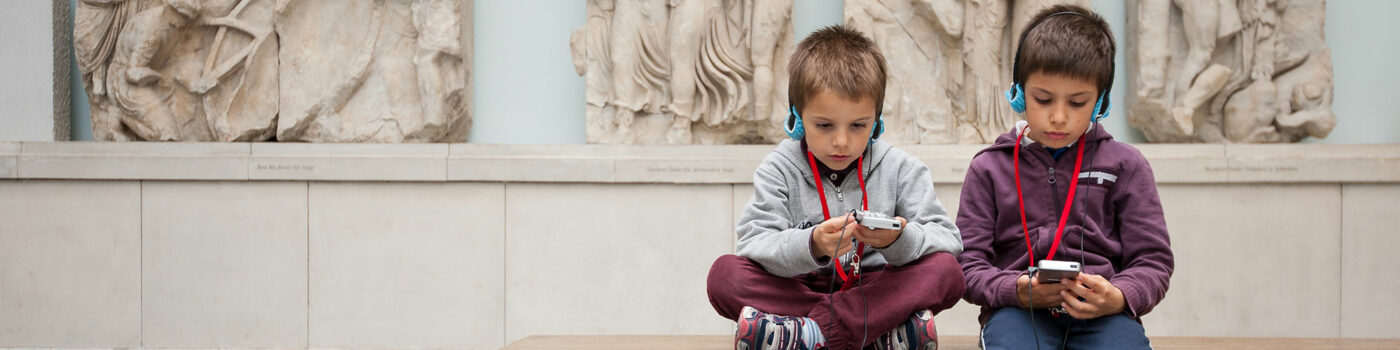
The Master’s program in Art Education deepens engagement with artistic and cultural educational processes. The program combines theoretical, practical, and research-based perspectives in order to develop a well-founded understanding of art education and mediation.
Students can set individual priorities and gain experience in various fields of practice—from schools and cultural education to museum contexts. The program opens up diverse professional opportunities in the field of art and cultural education.
- Degree
- Master of Arts (M.A.)
- Duration of studies in semester
- 4
- Start of degree program
- Winter semester
- Study location
- Erlangen, Nuremberg
- Number of students
- 1-50
- Subject group
- Art, Art Sciences
- Special ways to study
- Part-time degree program
- Teaching language
- completely in German
- Admission Requirements
- Qualification assessment
- Keywords
- Art, Education Science
What is the degree program about?
The main focus of the degree program is the educational and psychological potential of artistic work. How does it affect people’s development in different stages and situations in life? How can artistic work be used effectively in teaching she Master’s program in Art Education focuses on the relationship between art and education, with particular emphasis on artistic educational processes. Its aim is to develop a reflective and research-based perspective on art educational practice.
The program integrates theoretical, practical, and research-oriented approaches. It centers on the analysis of learning and developmental processes in the context of artistic practice, for example in school, extracurricular, and museum education settings.
-
The program can be studied full-time or part-time, begins in the winter semester, and is characterized by a flexible, modular structure that also allows for a semester abroad.
The curriculum includes modules in artistic practice and art education as well as related disciplines such as education and art history. Students develop subject-specific and methodological competencies alongside practical skills. A particular emphasis is placed on the acquisition and application of empirical research methods to address questions in art education.
In the elective area, students can set individual priorities, for example in art history, artistic practice, psychology, media education, aesthetic-cultural education, or empirical social research. This enables them to develop their own academic profile. An integrated internship provides the opportunity to apply and deepen acquired competencies in a chosen field of practice.
-
In the elective area, individual interests can be deepened and a personal profile in art education further developed.
-
The Master’s program in Art Education is aimed at graduates of art education or fine arts Bachelor’s programs with an interest in the relationship between art and education. Applicants are expected to demonstrate an independent artistic practice, curiosity about art education issues, and an interest in academic work.
In addition, openness to reflection and research as well as a willingness to actively contribute to educational processes in various contexts—such as schools, cultural education, or museums—are considered essential.
-
The program stands out for its strong emphasis on artistic practice, extensive opportunities for individual specialization within the elective area, and its regional and international collaborations.
-
The Master’s program in Art Education opens up a wide range of professional opportunities in the field of art and cultural education. Graduates work in formal and non-formal educational institutions, in museums, cultural institutions, and other artistic contexts where visual art is taught, mediated, and shaped in practice.
In addition, the program qualifies graduates for an academic career in research and teaching and provides a strong foundation for advanced engagement with issues in art education.
-
Periods abroad can be combined with the internship or the Master’s thesis in the third semester (full-time) or the sixth semester (part-time).
-
- Admission requirements (first semester)
- Qualification assessment
- Application deadline winter semester
-
15.07.
- Content-related admission requirements
-
Admission requires a subject-specific Bachelor’s degree in Art Education or a related degree in an artistic or art-historical program comprising at least 180 ECTS credits. Of these, at least 60 ECTS must have been earned in the core discipline (artistic practice and/or art history), including a minimum of 20 ECTS in artistic practice.
For applicants with a subject-specific degree, the final grade should be between 1.0 and 2.50. Applicants with a final grade between 2.51 and 3.00 will be invited to an interview. For applicants with a related degree, a final grade between 1.0 and 2.50 is required; in these cases, an interview is always part of the selection process.
The application must include a letter of motivation of approximately two pages outlining the applicant’s suitability and interest in the program. A central component of the application is the digital portfolio. This should include around 20 original works and provide insight into the applicant’s artistic practice. The selection should demonstrate the breadth of artistic work, proficiency in different techniques, and the ability to develop artistic themes. In addition to works of fine art, pieces from the field of applied arts may also be submitted.
Language skills
- German language skills for international applicants
- DSH 2 (written 2 / oral 1) or equivalent
- Details and notes
-
Detailed information on how to apply for the Master’s program in Art Education can be found at: https://www.kunst.phil.fau.de/studium/ba-ma/master-kunstpaedagogik/bewerbung-zum-masterstudium/
Do you need help or more information?
Our Student Advice and Career Service (IBZ) is the central point of contact for all questions about studying and starting a degree programme. Our Student Service Centres and subject advisors support you in planning your studies.